

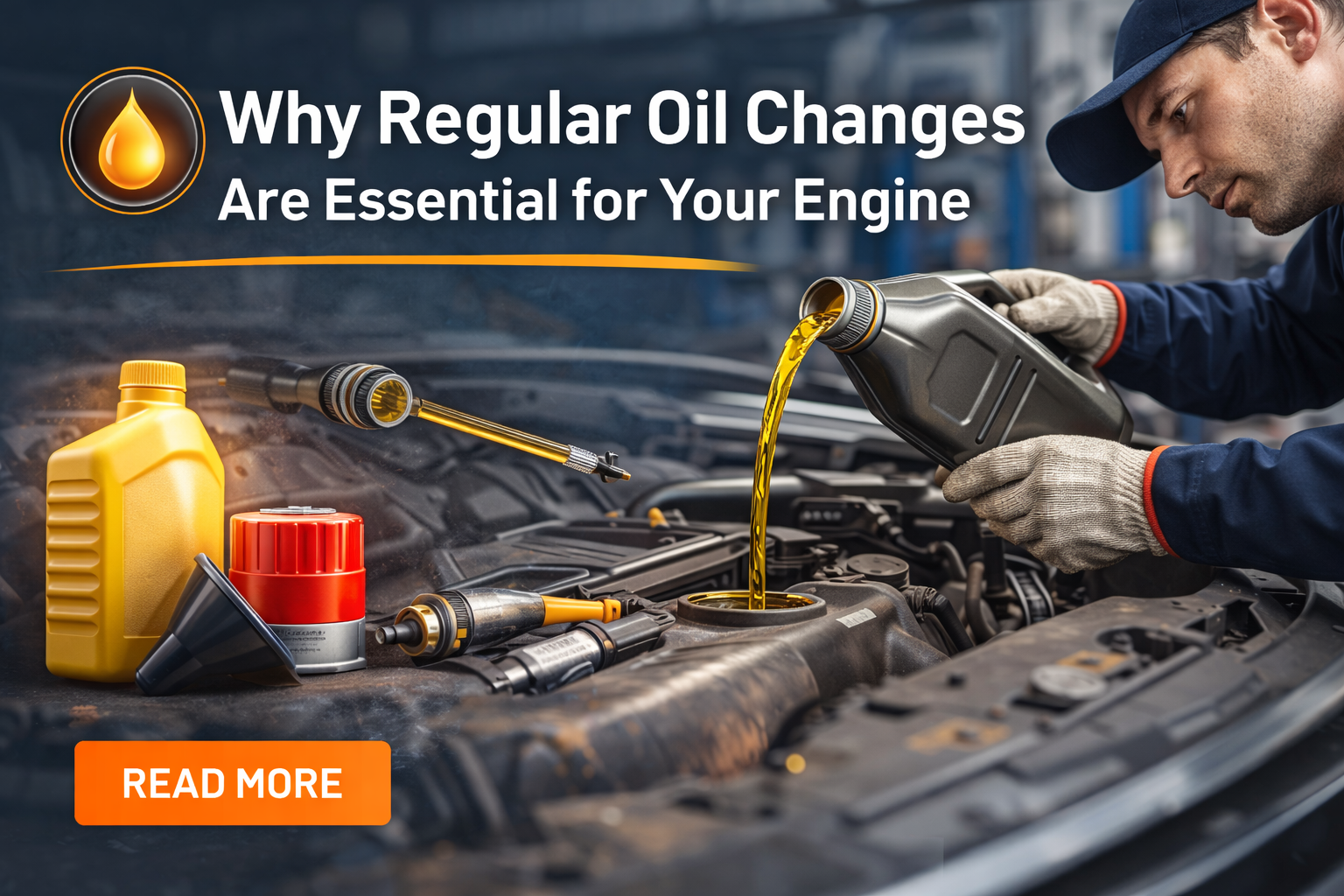
Regular oil changes are one of the most important maintenance services for keeping your vehicle’s engine running efficiently. Engine oil plays a vital role in lubricating moving parts, reducing friction, and preventing overheating.
Skipping oil changes can lead to engine wear and expensive repairs.
What Does Engine Oil Do?
Engine oil performs several essential functions including:
• Lubricating engine components
• Reducing friction between moving parts
• Preventing engine overheating
• Removing dirt and debris
• Protecting engine parts from corrosion
Benefits of Regular Oil Changes
1. Improves Engine Performance
Fresh oil helps engine components move smoothly and improves overall engine efficiency.
2. Extends Engine Life
Clean oil reduces internal wear and protects engine components from damage.
3. Better Fuel Efficiency
A well-lubricated engine requires less effort to operate, improving fuel efficiency.
4. Prevents Overheating
Oil helps regulate engine temperature by reducing friction and carrying heat away from moving parts.
How Often Should You Change Your Oil?
Most vehicles require an oil change every 3,000 to 5,000 miles, depending on the type of oil and driving conditions. Always follow your vehicle manufacturer’s recommendations.
Conclusion
Regular oil change services are essential for maintaining engine health and ensuring long-term vehicle performance. Routine maintenance today can prevent expensive repairs in the future.